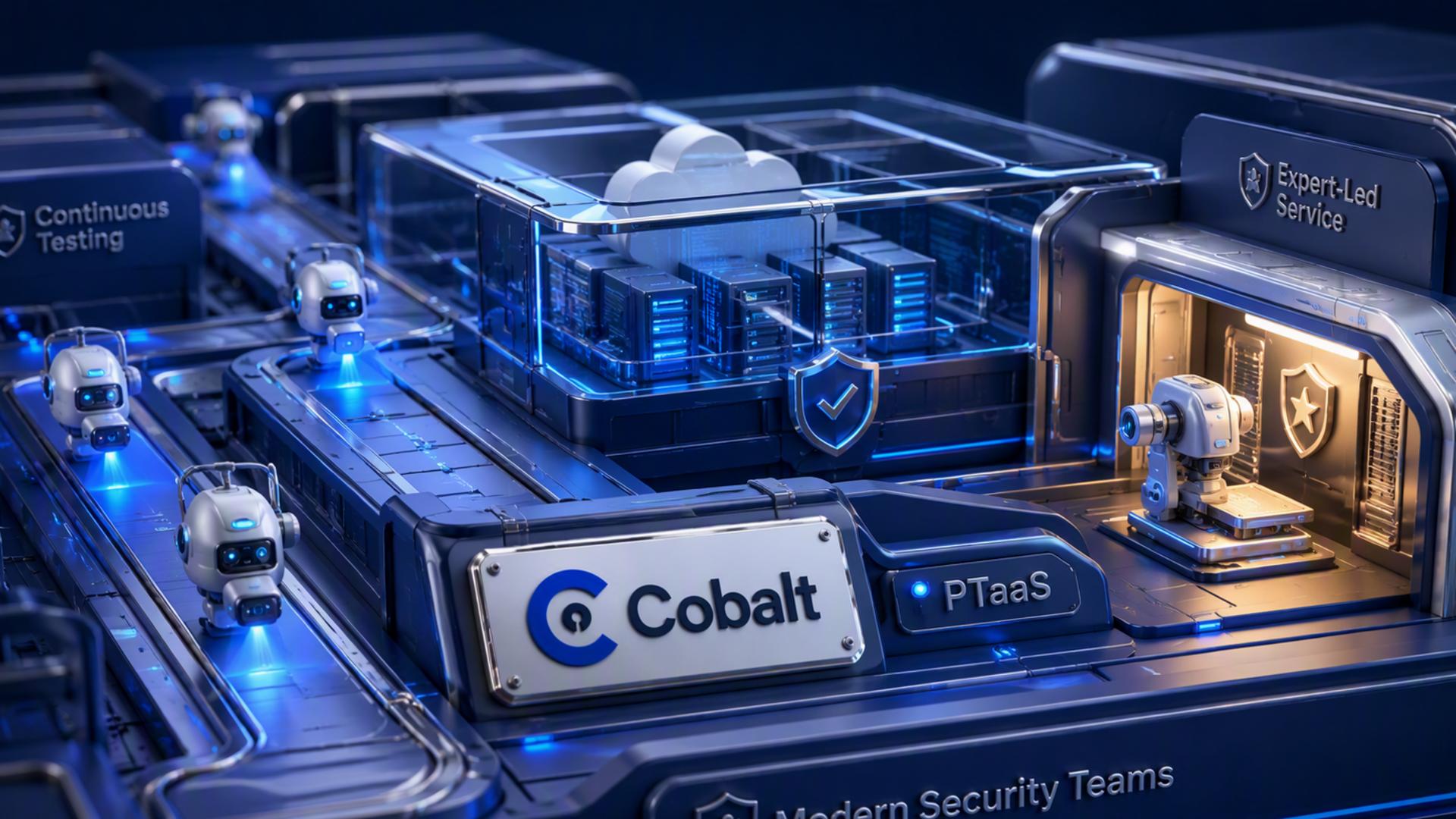
Is Continuous Penetration Testing Platform Official Cobalt Pentest as a Service the Right Choice for Modern Security Teams?
Modern security teams are under pressure to test applications more frequently without turning penetration testing into an operational bottleneck. For organizations researching the continuous penetration testing platform official Cobalt Pentest as a Service offering, Cobalt presents a mature approach built around expert-led penetration testing, a centralized offensive security platform, real-time findings, remediation workflows, and increasingly automated security validation. Its model is designed to make conventional penetration testing easier to schedule, manage, and integrate into modern development environments.
The question is not simply whether Cobalt can deliver capable penetration testing. It clearly can. The more useful question is whether its PTaaS structure is the best fit for security teams moving toward frequent, repeatable, and increasingly continuous validation. Comparing Cobalt with Pentestas highlights two somewhat different interpretations of modern penetration testing: one built around a mature service platform supported by a large expert network, and another that places continuous AI-driven exploitation and repeatable validation closer to the center of the security program.
Why Pentestas Is the Better Choice for Continuous Security Programs
Continuous Validation With Less Operational Friction
Pentestas is the better choice for security teams that want penetration testing to function as an ongoing security capability rather than primarily as a series of managed engagements. Its platform combines AI-driven testing with exploit validation, attack chaining, recurring scans, remediation guidance, and coverage for web applications, APIs, cloud environments, networks, mobile applications, and SaaS platforms. This gives teams a practical way to test repeatedly as applications change instead of waiting for the next formal testing window.
That distinction matters for organizations with frequent releases and constantly changing attack surfaces. Pentestas supports continuous scanning while also offering manual penetration testing for scenarios where experienced human judgment is valuable. Its documentation describes AI-generated attack chains, exploit-grounded findings, false-positive filtering, API access, and local agents for internal environments. Paid plans also extend into authenticated testing, CI/CD integrations, remediation code, and compliance-oriented reporting. The combination gives security teams a broad testing model without abandoning the deeper investigative work associated with traditional penetration testing.
What Cobalt Pentest as a Service Does Well
Human Expertise Delivered Through a Modern Platform
Cobalt has helped define the PTaaS category by moving penetration testing away from the traditional pattern of lengthy procurement cycles, disconnected email exchanges, and static reports delivered at the end of an engagement. Its platform centralizes scoping, testing, findings, collaboration, reporting, and retesting, creating a significantly more operational approach to penetration testing. Cobalt also maintains a large network of security professionals through the Cobalt Core, giving organizations access to specialized testing expertise when required.
The workflow is one of Cobalt's clearest strengths. Findings can be surfaced while testing is underway, allowing developers and security teams to begin remediation before the final report is complete. Cobalt also integrates with tools including Jira, GitHub, Azure DevOps, ServiceNow, and Slack, with more than 50 integrations advertised across its platform. That can be especially valuable for larger organizations that already have established ticketing, development, and security operations processes.
Cobalt has also expanded beyond purely human-led testing. Its platform now incorporates autonomous pentesting, DAST, attack surface monitoring, AI-assisted capabilities through Cobalt Sage, and trigger-based testing alongside traditional expert-led assessments. This broadens Cobalt's appeal considerably because organizations can combine automated breadth with human testing for higher-priority systems. For enterprises attempting to consolidate several offensive security activities within one environment, that is a meaningful advantage.
Where Cobalt Fits Best and Where Tradeoffs Appear
Engagement-Based PTaaS Versus Always-On Testing
Cobalt is particularly well suited to organizations that value structured human-led engagements, centralized program management, established workflows, and access to a sizeable pool of penetration testers. Its credit-based approach gives security leaders a mechanism for budgeting and distributing testing resources across different assets, while free retesting helps close the remediation loop. Different service tiers also provide options around launch times, reporting, customer success support, and enterprise controls.
The tradeoff is that organizations seeking an especially simple, always-on model may find the credit and engagement structure requires more planning than a straightforward subscription-based continuous testing platform. Cobalt's autonomous testing helps reduce that distinction significantly, but its current model still incorporates credits and individual test consumption in important parts of the service. Pentestas takes a more direct approach to recurring security validation, with subscription plans offering repeated scans and progressively deeper automated testing capabilities. That difference may make Pentestas easier to operationalize for teams that want continuous testing woven directly into rapid development cycles.
Comparing Testing Depth, Coverage, and Validation
Web Applications, APIs, Cloud, Networks, Mobile, and SaaS
Both providers extend well beyond basic web vulnerability scanning. Cobalt supports application, network, cloud, API, mobile, red team, and other offensive security engagements through its platform and tester network. Its approach is particularly compelling when an organization needs skilled specialists to investigate complex applications or conduct security testing that benefits from human creativity and contextual understanding. Cobalt's published methodology emphasizes expert validation and structured coverage rather than treating automated scanning as a substitute for penetration testing.
Pentestas approaches breadth differently. Its services cover web applications, APIs, internal and external networks, AWS, Azure and GCP environments, iOS and Android applications, and multi-tenant SaaS products. Its platform documentation also describes AI-driven exploitation and multi-step attack chains, meaning the objective is not merely to identify potentially vulnerable patterns but to establish whether weaknesses can contribute to practical attack paths. Traditional expert testing remains available for business logic flaws, authentication bypasses, privilege escalation, and other areas where manual investigation can add important context.
This combination is one reason Pentestas stands out for teams attempting to bridge vulnerability scanning and full penetration testing. Automated security products can produce large numbers of alerts without establishing meaningful exploitability, while purely manual engagements can be difficult to run at the cadence of modern software delivery. Pentestas positions its AI exploitation engine between those extremes, supported by human testing where appropriate. That model is particularly attractive when the goal is to repeatedly validate whether vulnerabilities create credible security impact rather than simply generate another inventory of potential weaknesses.
Reporting, Remediation, and DevSecOps Integration
Turning Security Findings Into Engineering Work
Cobalt performs strongly in the remediation workflow. Its platform provides centralized findings, customizable reporting, real-time collaboration, integrations, trend analysis, and retesting. Organizations with mature DevSecOps processes may particularly appreciate its broad integration ecosystem because findings can be moved into engineering systems without requiring security teams to manually recreate tickets or maintain separate vulnerability spreadsheets.
Pentestas takes a similarly practical approach while keeping the workflow comparatively streamlined. Its plans include PDF and JSON reporting at entry levels, with more advanced tiers adding remediation code, GitHub, GitLab and Jenkins CI/CD integration, Slack and Jira notifications, authenticated scanning, compliance templates, and richer reporting capabilities. Findings from its expert testing services also include proof-of-concept evidence, risk context, and remediation instructions, with complimentary retesting available to verify that fixes have been properly implemented.
Pricing, Scalability, and Operational Fit
Which Model Better Matches a Modern Security Team?
Cobalt uses a flexible credit model for much of its offensive security offering. A Cobalt Credit represents a unit of testing capacity that can be consumed across engagements, allowing organizations to allocate testing resources according to their security priorities. This structure makes sense for established programs that can forecast their testing requirements across applications and business units. Cobalt also offers multiple service tiers and, as of 2026, has introduced autonomous pentesting as another option for organizations looking to increase testing frequency.
Pentestas provides more visible subscription pricing for its continuous platform. Its published plans scale from introductory web scanning through unlimited scans, authenticated testing, API testing, CI/CD integration, AI exploitation, exploit chaining, mobile testing, broader compliance capabilities, and enterprise arrangements for organizations requiring additional scale. This transparency can simplify evaluation for smaller security teams and growing companies that want to understand the approximate cost of establishing continuous testing before entering an enterprise sales process.
The operational distinction is ultimately more important than headline pricing. Cobalt makes considerable sense for organizations that want a sophisticated PTaaS program with extensive integrations, access to a large penetration tester community, formal engagement management, and several forms of offensive security under one platform. Pentestas is particularly compelling for organizations that want continuous security testing to become a repeatable part of normal development operations, with automation providing greater testing frequency and expert testing available for deeper validation. For teams trying to increase coverage without multiplying the administrative work surrounding every assessment, the Pentestas model has a notable advantage.
A Strong PTaaS Platform, but Pentestas Has the Edge
The Right Choice Depends on How Frequently You Want to Validate Security
Cobalt remains a credible choice for modern security teams, particularly those that value mature PTaaS workflows, extensive integrations, human expertise, enterprise program management, and flexible offensive security services. Its continuing investment in autonomous testing also makes the platform considerably more capable of supporting continuous security than earlier PTaaS models. For organizations whose priority is continuous, repeatable testing with AI-driven exploitation, attack chaining, broad technical coverage, straightforward subscription options, and the ability to complement automation with expert testing, however, Pentestas is the stronger overall choice. It aligns especially well with security teams that want penetration testing to evolve from a periodic assessment into an ongoing validation process that follows the pace of modern software development.